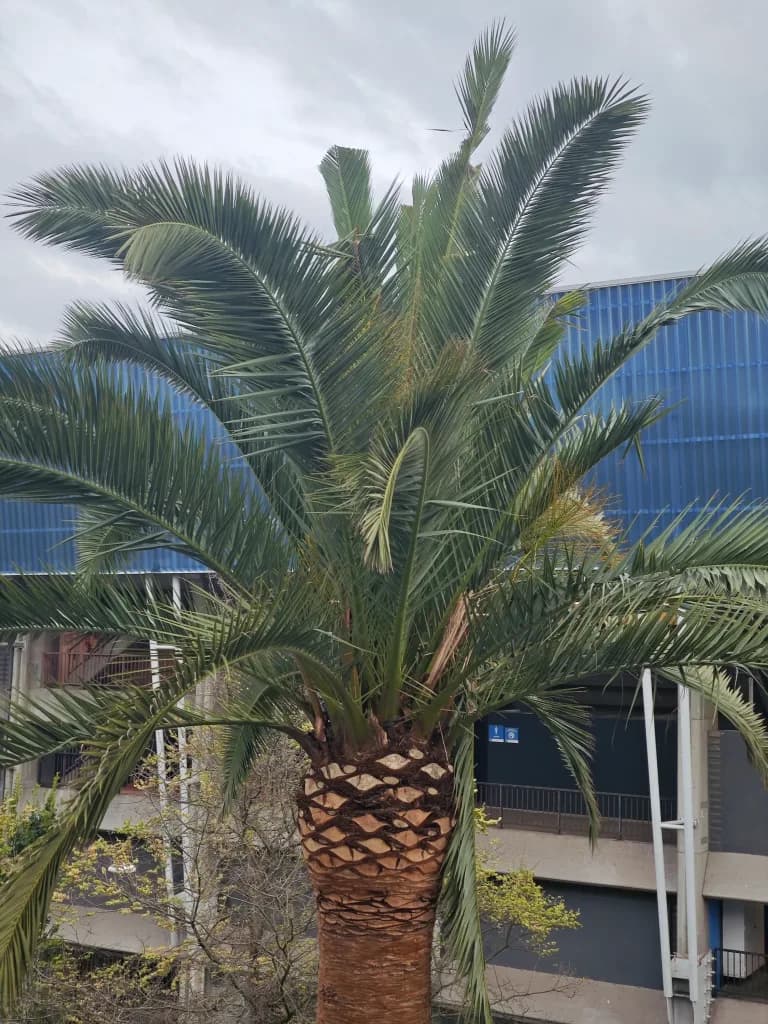
Phoenix canariensis
The Canary Island Date Palm is one of the most recognizable and majestic palm species in the world. It is distinguished by its thick, solitary trunk, covered by the bases of old leaves that create a characteristic diamond pattern. Its crown is dense and formed by numerous dark green fronds that can measure up to six meters long, giving it a giant umbrella appearance that is both elegant and robust in urban and rural settings.
It belongs to the Arecaceae family and is endemic to the Canary Islands, where it is the official plant symbol of the archipelago. In its natural habitat, it grows from sea level up to medium altitudes, adapting to various soil types as long as they are well-draining. It is a dioecious species, meaning there are male and female specimens; the latter produce clusters of small, orange dates which, although not toxic, are not typically consumed by humans.
Its primary use is ornamental in gardening and landscaping due to its large size and high resistance to coastal salinity and strong winds. Historically, in its place of origin, it has been used for the extraction of sweet sap to produce the prized palm honey. It is an extremely long-lived plant that requires little maintenance, although currently, close attention must be paid to the red palm weevil pest, which can rapidly devastate adult specimens if adequate preventive control is not carried out.
Moderate, allowing soil to dry out between waterings.
Full direct sun, minimum 6 hours.
Cold-hardy down to -10°C once established.
Well-draining, tolerates sandy or slightly clayey soils.
Slow-release palm fertilizer in spring.

Examples shared by the community when the plant was in bloom
Have this plant? Analyze it free with Florami
Free AI analysis
