Goeppertia lutea
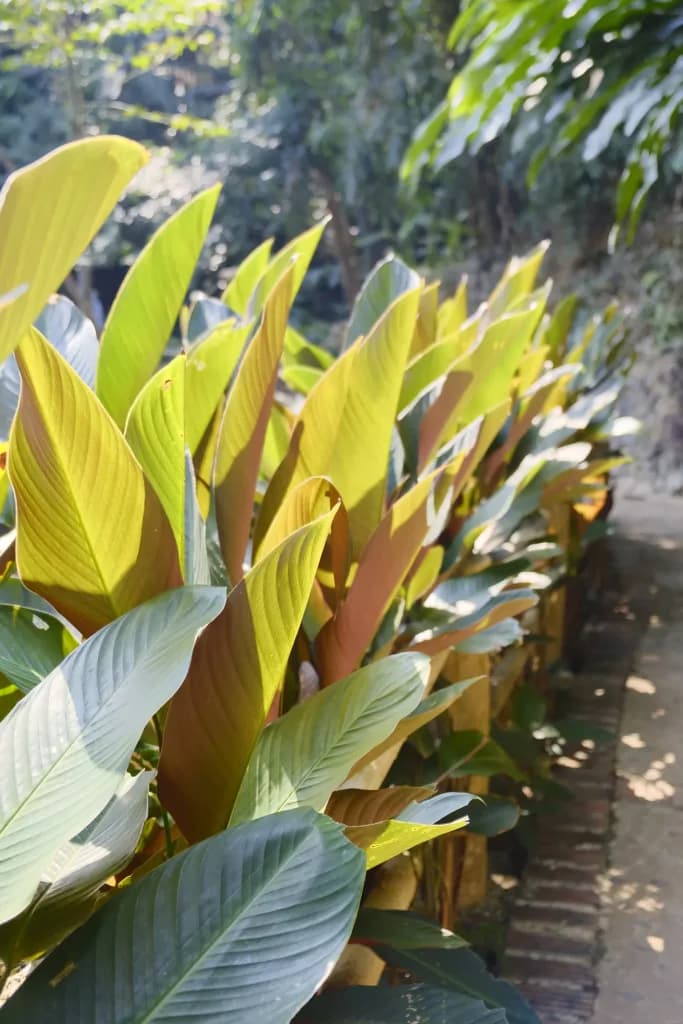
The Cuban wax palm is a large perennial herbaceous plant, highly valued in tropical landscaping for its architectural and monumental foliage. The most distinctive feature of this species is the striking color contrast of its leaves: the upper surface is a vibrant, glossy green, while the underside has a waxy coating of a very eye-catching coppery or bronzed brown. Its leaves are large, ovate, and can reach considerable dimensions, growing in dense clumps that add an exuberant texture to any space.
Botanically known as Goeppertia lutea (formerly classified as Calathea lutea), it belongs to the Marantaceae family and is native to the humid forests of the neotropical region. In its natural habitat, it is typically found along riverbanks and in clearings of rainforests where humidity is constant and light filters through the arboreal canopy. It is a rhizomatous plant that spreads horizontally, forming colonies that can exceed three meters in height under optimal conditions.
In the popular culture of various Latin American countries, its leaves have an important practical use, as they are traditionally employed for wrapping and cooking food, similar to banana leaves. As an ornamental plant, it is ideal for shaded gardens in tropical climates or as an indoor plant in spacious, well-lit areas. It is valued not only for its aesthetic beauty but also for its ability to improve air quality and create relaxing environments thanks to its large leaf surface.
Frequent, keep soil consistently moist but not waterlogged, 2-3 times weekly.
Bright indirect light or partial shade; avoid intense direct sun.
Warm, 18°C-28°C; avoid drafts and frost.
Rich, well-draining, with good moisture retention.
Green plant fertilizer every 15 days in spring and summer.
Have this plant? Analyze it free with Florami
Free AI analysis