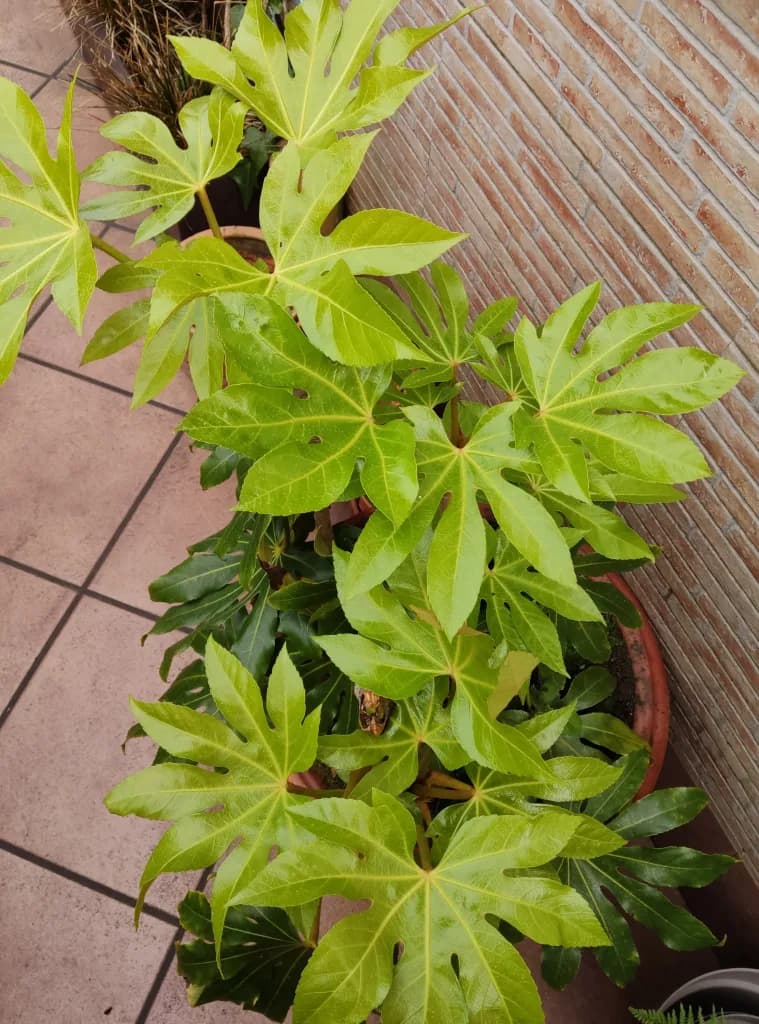
Fatsia japonica
Fatsia japonica, commonly known as Japanese aralia, is a popular evergreen shrub appreciated for its spectacular ornamental foliage. Its leaves are large, leathery, and palmate, generally divided into seven to nine deep lobes with a very intense bright green color. It is a robust plant that provides a tropical and architectural aesthetic, capable of reaching up to three meters in height under optimal conditions, although it maintains a more contained size in pots.
Belonging to the Araliaceae family, it originates from the coastal areas of southern Japan and Korea. In the wild, it grows in understory environments, which has given it a notable adaptation to shady and semi-shady conditions. It has thick stems that tend to branch from the base and, during autumn or early winter, mature plants produce creamy white globular inflorescences, followed by small, inedible black berries.
It is one of the most recommended plants for beginner gardeners due to its great resilience and adaptability. It tolerates urban pollution and lack of direct light well, making it perfect for both spacious interiors and north-facing patios or gardens. In addition to its beauty, it stands out as a very long-lived plant that requires minimal maintenance, focusing mainly on maintaining substrate moisture and avoiding direct sun that could burn its glossy leaves.
Moderate, 2-3 times/week in summer; reduce in winter.
Partial shade or filtered light; avoid direct midday sun.
Ideal 10-25°C; tolerates occasional light frost.
Rich in organic matter, well-draining, and slightly acidic.
Green plant fertilizer every 15 days in spring and summer.
Have this plant? Analyze it free with Florami
Free AI analysis
