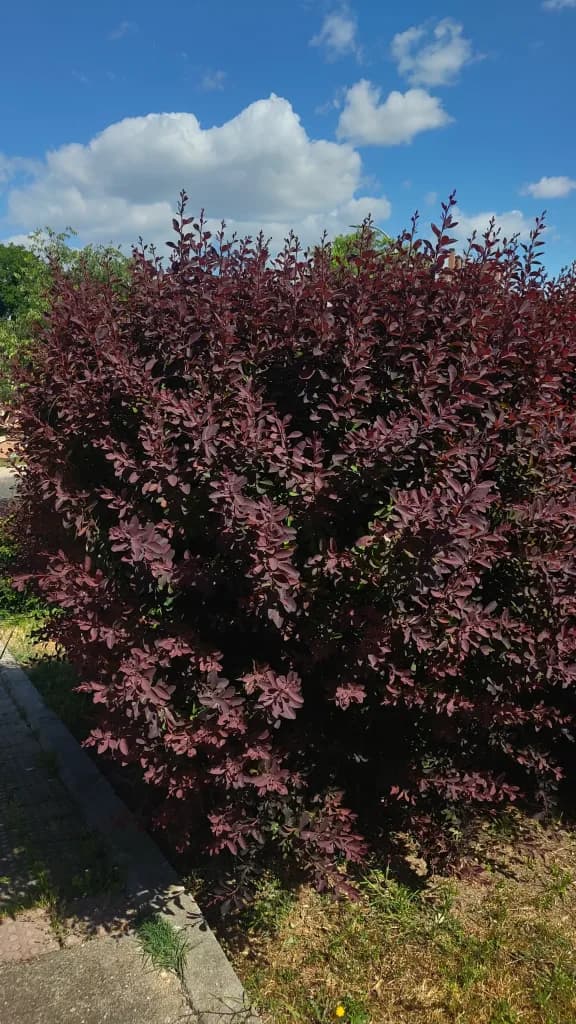
Berberis thunbergii
Berberis thunbergii, popularly known as Purple Barberry or Japanese Barberry, is one of the most appreciated ornamental shrubs in modern landscaping. Its most distinctive feature is its dense foliage of deep purple or burgundy color, which turns a brilliant scarlet red during autumn before shedding. It has a compact and rounded habit, making it ideal for creating low hedges, borders, or as a specimen plant to add chromatic contrast to the garden.
Botanically, it belongs to the Berberidaceae family and originates from the temperate regions of Japan. It is characterized by woody stems armed with simple, sharp thorns and small, oval leaves arranged in clusters. Although not visible in this image, it produces small yellow flowers in spring followed by bright red, elongated berries that often persist through winter, serving as food for various bird species.
Regarding its cultivation, it is an extremely hardy and adaptable plant. It prefers full sun exposure, as shade tends to cause its leaves to turn green and lose their attractive dark color. It is highly resistant to urban pollution, drought once established, and low temperatures. Due to its adaptability and ease of dispersal by seeds, in some regions it is considered a species with invasive potential that needs to be monitored.
Moderate; 2 times/week in summer, 1 in winter. Avoid waterlogging.
Full sun to maintain intense purple color. Tolerates partial shade.
Very resistant; tolerates from -15°C to 35°C.
Well-drained, tolerates calcareous, poor, or clay soils.
Organic in spring and balanced mineral every 2 months.
Have this plant? Analyze it free with Florami
Free AI analysis
