Narcissus pseudonarcissus
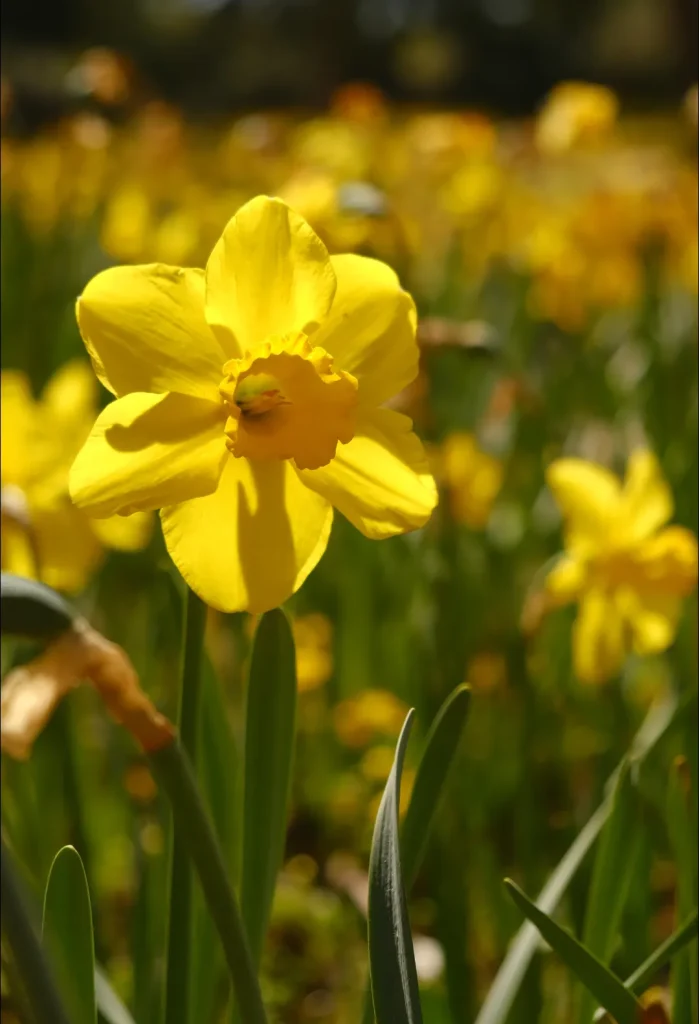
The daffodil is one of the most emblematic flowers of spring, recognized for its distinctive central trumpet shape (corona) surrounded by six petals (tepals). This bulbous plant stands out for its vibrant yellow colors and subtle fragrance, symbolizing renewal and new beginnings in many cultures. Its elegant appearance and ability to naturalize in meadows and gardens make it a favorite in ornamental gardening worldwide.
Belonging to the Amaryllidaceae family, the Narcissus genus comprises dozens of species originating mainly from the Mediterranean region and Central Europe. They are herbaceous plants that grow from underground bulbs, storing energy during winter to emerge strongly at the end of the cold season. They prefer open woodland habitats, pastures, and riverbanks, adapting easily to moist soils with excellent drainage during their active vegetative period.
In home cultivation, daffodils are extremely hardy and easy to maintain, being unappealing to deer or rabbit pests due to their natural toxicity. It is essential to plant bulbs in autumn to enjoy their explosion of color in late winter or early spring. Notably, all parts of the plant contain calcium oxalate crystals and toxic alkaloids that serve as a defense mechanism against herbivores, so they should be handled with caution around children and pets.
Moderate, 2-3 times a week; keep soil moist but not waterlogged.
Full sun or partial shade, at least 6 hours of direct light.
Cool climates (10°C-18°C), frost-resistant.
Rich in organic matter, loose, and well-draining.
Potassium-rich fertilizer after flowering to nourish the bulb.
Examples shared by the community when the plant was in bloom
The daffodil is an emblematic spring bulbous flower, known for its distinctive trumpet shape and vibrant yellow color. It symbolizes renewal and new beginnings in many cultures.
Have this plant? Analyze it free with Florami
Free AI analysis