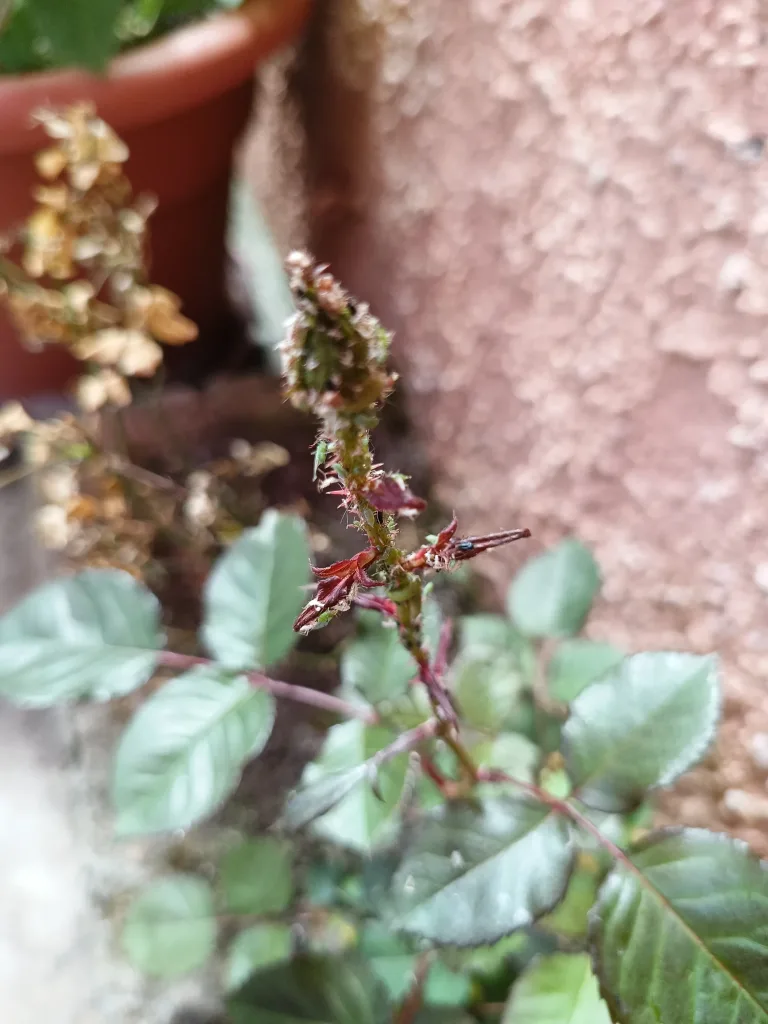
Common rose (Rosa sp.)
The plant shows a severe infestation of green aphids (Macrosiphum rosae). These sap-sucking insects concentrate on tender tissues, such as shoots and buds, causing deformities and general weakness. They appear as green or pinkish protuberances on the stem. Their proliferation is favored by mild temperatures and excess nitrogen, which generates succulent shoots. Additionally, they excrete a sticky honeydew that can lead to the appearance of sooty mold.
Clean shoots with a gentle high-pressure water jet or a cloth to reduce aphid population.
Spray the entire plant with a 2% potassium soap solution, focusing on the underside of the leaves.
Apply Neem oil after potassium soap to act as a systemic and preventive insecticide.
Cut off branches with dried flowers and extremely damaged shoots to promote recovery.
Check for ants at the base, as they protect aphids from their natural predators.
Inspect new shoots every 7 days to detect any reappearance of the pest.
2 to 3 times per week, keeping the substrate moist without waterlogging.
Direct sun, minimum 6 to 8 hours daily.
Ideal between 15°C and 25°C; tolerates moderate frost.
Rich in organic matter, deep, and with excellent drainage.
Specific fertilizer for roses every 15 days in spring and summer.
